Plastic welding equipment combines heat, pressure, electricity, and moving components in one compact work area. A hot-air gun may exceed 600°C, while ultrasonic systems can generate high-frequency vibration and unexpected clamping forces. Operators often notice heat first. Pinch points deserve equal attention.
So, What safety standards should plastic welding equipment follow? This article examines China’s leading requirements alongside internationally recognized frameworks. Key references include GB/T 15706 for machinery risk assessment, GB/T 5226.1 for electrical equipment, and ISO 12100 for hazard identification and risk reduction. ISO 13849-1 also helps evaluate safety-related control systems. These standards should be checked against the machine’s actual design, not copied into a manual.
The International Labour Organization reports millions of work-related injuries worldwide each year, while the U.S. Bureau of Labor Statistics continues recording serious incidents involving machinery, burns, and electrical exposure. The figures are broad, but they show a practical truth: small design weaknesses become costly during repetitive production. Nancy Leveson, an MIT systems-safety expert, stated, “Safety is an emergent property of systems.” Her point matters here. A guard alone cannot compensate for poor grounding, weak training, or an emergency stop placed behind the operator. Sometimes, compliance looks complete on paper.
This guide compares ten important safety standards and explains their application to plastic welding equipment manufactured, imported, or used in China. It also considers inspection records, thermal protection, interlocks, operator access, and maintenance isolation. The list is useful, but not final. Machine risk changes with materials, welding temperature, workplace layout, and human behavior. Reliable safety begins with evidence.
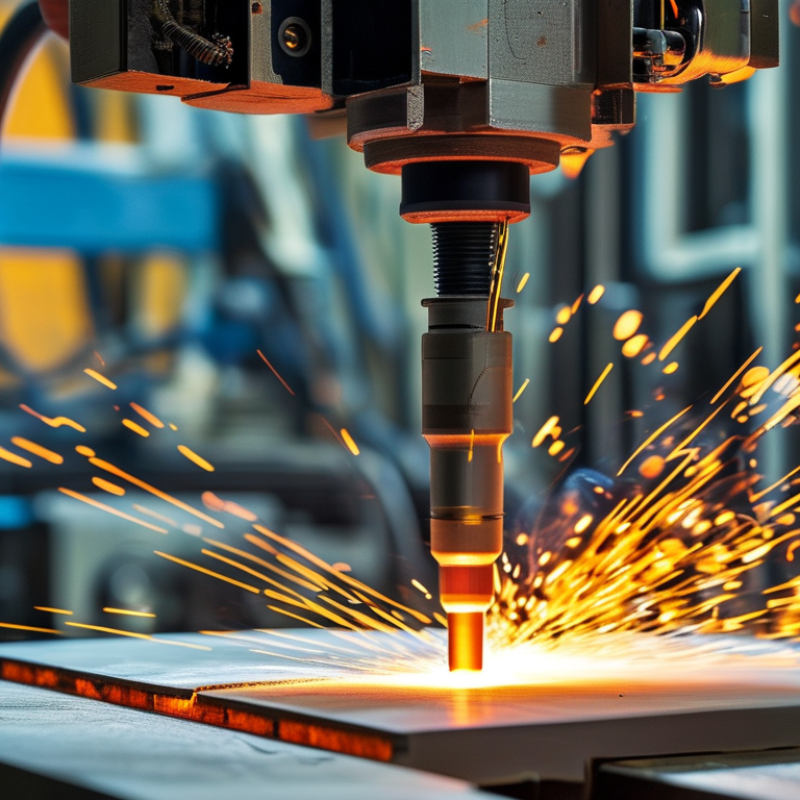
For plastic welding equipment, this ranking reflects risk-control priority, not an official government order. GB/T 15706-2012 leads with risk assessment and reduction. GB 5226.1-2019 covers electrical safety. GB/T 16855.1-2018 and GB/T 16855.2-2015 address control-system safety and validation. GB/T 16754-2021 specifies emergency-stop functions. GB/T 8196-2018 covers fixed and movable guards. GB/T 18831-2017 guides interlocking protective devices. GB/T 23821-2022 defines safety distances. GB/T 19670-2005 helps prevent unexpected start-up. GB/T 3766-2015 controls hydraulic risks. Together, these standards cover heat, pressure, motion, electricity, and operator access.
The International Labour Organization reported 2.93 million work-related deaths globally in 2019. That figure makes small design gaps difficult to dismiss. The International Federation of Robotics recorded 276,288 industrial robot installations in China during 2023. More automation increases the need for validated guarding and control logic. In practical audits, I check door switches, hot surfaces, pneumatic leaks, and restart behavior. A machine may pass visual inspection yet fail during maintenance. That weakness deserves reflection.
Tips: Record every hazard near the welding head, clamp, and heater. Test emergency stops under load. Verify safe restart after power loss. Keep risk assessments machine-specific. Do not treat a copied checklist as evidence. Certified components help, but installation quality still decides protection.
No. It shows risk-control priority for plastic welding equipment. The ranking is practical, not an official legal sequence. Requirements should match the current machine and applicable regulations.
Check heat, pressure, motion, electricity, and operator access. Inspect the welding head, clamp, heater, and nearby surfaces. Record each hazard clearly. A copied checklist is not enough.
GB/T 15706-2012 provides principles for identifying and reducing machine risks. It supports safer design decisions before equipment reaches production. The assessment should remain machine-specific.
GB 5226.1-2019 covers grounding, insulation, disconnecting devices, and control circuits. Test the earth connection with a meter. Do not trust a green wire alone. Protect terminals with secure covers.
GB/T 4208 defines enclosure protection against solids and water. IP20 offers limited solid-object protection and no water protection. IP65 resists dust and water jets. IP67 supports temporary immersion under test conditions.A sealed enclosure can still trap heat. Damaged cable glands reduce protection quietly. Recheck the rating after maintenance or enclosure changes.
GB/T 8196 covers fixed and movable guards. Guards should block access to crushing points and heated areas. GB/T 18831 addresses interlocking protective devices. Opening a guarded door should stop hazardous movement.Restarting should require deliberate action. Test the switch regularly. Operators may bypass it during production pressure. That risk needs attention.
GB/T 16754-2021 covers emergency-stop functions. The device should be visible and reachable from operating positions. It should stop hazardous movement quickly.Stopping motion does not remove stored heat or pressure. Labels should explain this limitation. Test emergency stops under load.
GB/T 19670-2005 helps prevent unexpected machine start-up. Verify restart behavior after power loss, maintenance, and control-system resets. A machine should not move when power returns unexpectedly.This detail is often missed. Observe the real restart sequence, not only the manual.
GB/T 3766-2015 addresses hydraulic safety. Inspect pressure lines, leaks, stored energy, and release procedures. Control-system safety also requires design validation under GB/T 16855.1-2018 and GB/T 16855.2-2015.Certified components help, but installation quality still matters. Test the complete system. A visual inspection can pass while maintenance behavior fails.
What safety standards should plastic welding equipment follow? In China, a practical safety framework can be organized around ten key standards covering risk assessment, electrical protection, machine guarding, verification, warning signs, and noise control. GB/T 15706 and GB/T 16855.1 provide a three-step approach: identify hazards, assess and reduce risks, and verify that protective measures work effectively. Electrical safety should follow GB 5226.1, while enclosure protection can be evaluated under GB/T 4208 using suitable IP ratings from IP20 to IP69 according to the working environment.
For physical protection, GB/T 8196 and GB/T 18831 address guards, interlocks, and protective devices, while GB/T 16754 supports the safety-related control system and emergency stopping principles. Final checks should also consider hydraulic or pneumatic safety under GB/T 3766, clear hazard communication under GB 2894, and workplace noise exposure, including the recommended 85 dB(A) limit. Together, these standards help manufacturers and users create safer, more reliable plastic welding operations.

 Heping Mechanical